20 Ikigai Examples from Real People
Ikigai looks different for everyone. Here are 20 examples spanning careers, cultures, and walks of life - proof that your reason for being is already within you.
A rural Japanese farmer
Traditional"Growing food that feeds the community"
Archetype: Steady Guardian →A high school science teacher
Education"Making young minds curious about the universe"
Archetype: Gentle Teacher →A pro bono immigration lawyer
Social Justice"Fighting for those who cannot fight for themselves"
Archetype: Compassionate Rebel →A data scientist studying climate change
Science"Finding patterns that save the planet"
Archetype: Pattern Finder →A startup founder
Technology"Building tools that didn't exist yesterday"
Archetype: Restless Inventor →An Okinawan grandmother
Traditional"Tending her garden every morning at dawn"
Archetype: Steady Guardian →A documentary filmmaker
Creative"Telling stories others are afraid to tell"
Archetype: Bold Storyteller →A retired engineer who mentors youth
Mentoring"Passing on decades of knowledge to the next generation"
Archetype: Gentle Teacher →A social worker in foster care
Social Services"Being the safe harbour for children in crisis"
Archetype: Steady Guardian →An operations manager at a nonprofit
Nonprofit"Making systems work so others can focus on mission"
Archetype: Systems Thinker →A reluctant team lead in tech
Technology"Creating environments where others do their best work"
Archetype: Reluctant Leader →An environmental activist
Activism"Standing between nature and those who would destroy it"
Archetype: Compassionate Rebel →A translator and cultural guide
Language"Building bridges between languages and peoples"
Archetype: Bridge Builder →Practical template
How to write your own ikigai statement
A useful ikigai statement is specific enough to test. Start with this structure: I use [skill] to help [people] with [problem] through [activity or path].
Teacher example
I use patient explanation to help anxious students understand science through simple experiments.
Builder example
I use systems thinking to help small teams reduce chaos through clearer processes.
Healer example
I use creativity and care to help overwhelmed people feel safe through music, art, or conversation.
If you want the fastest starting point, take the Ikigai Report test first. It gives you an archetype and four-circle pattern you can turn into a statement.
Downloadable tools
Download the statement template and worksheet
These original tools are designed to make the concept useful, not just interesting. Use them after reading the guide, or take the free test first and bring your result back to the worksheet.
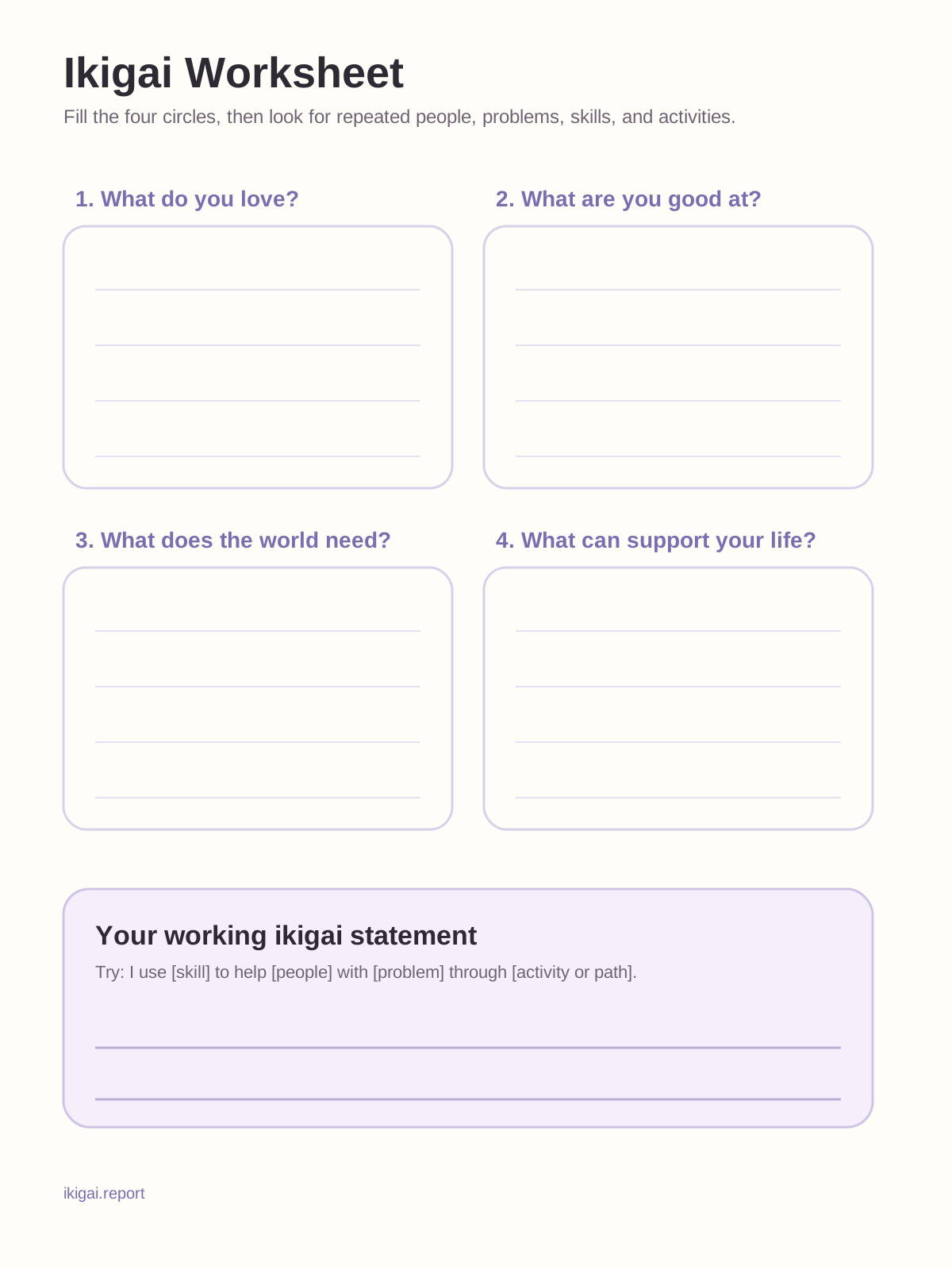
Printable Ikigai Worksheet
A one-page worksheet for mapping the four circles and writing a clear ikigai statement.
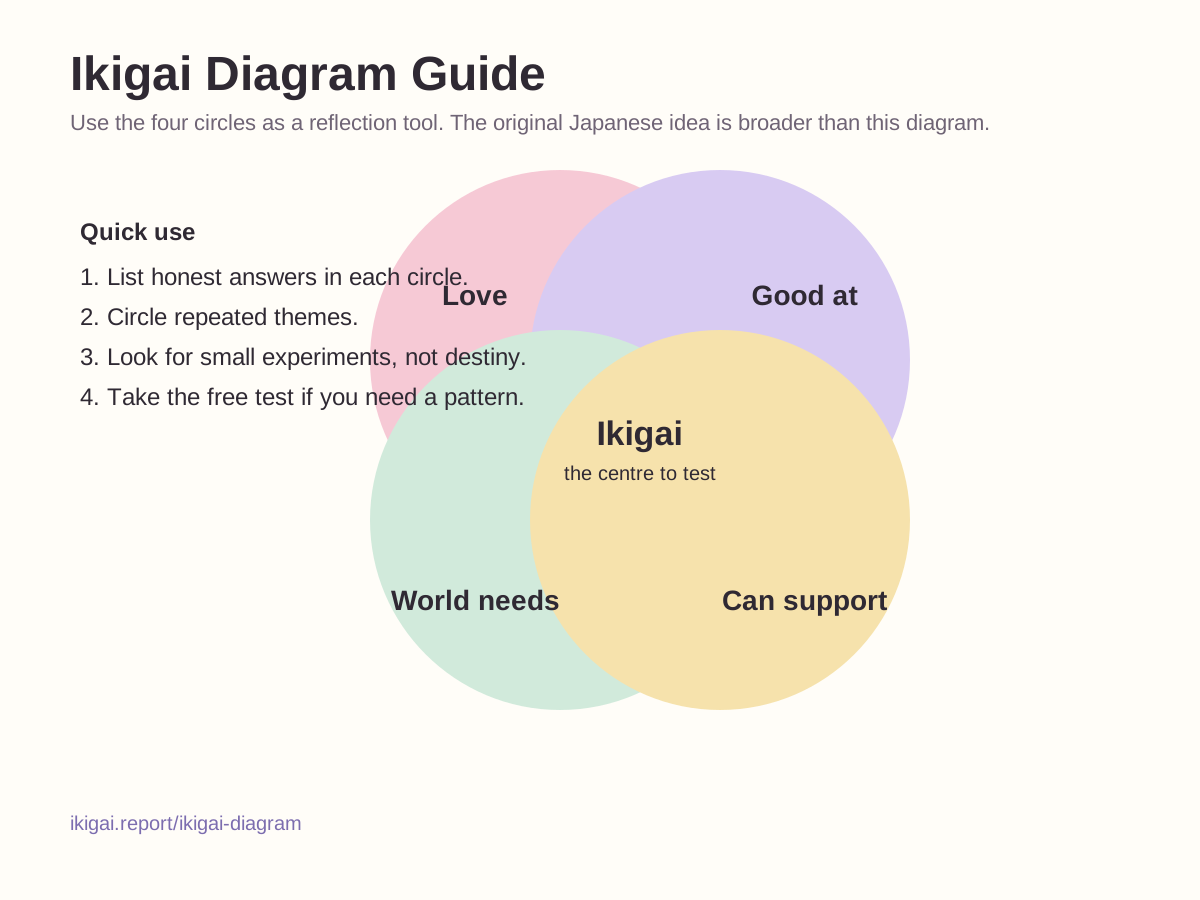
Ikigai Diagram Guide
A clean visual guide to the four circles, classic overlaps, and centre point.
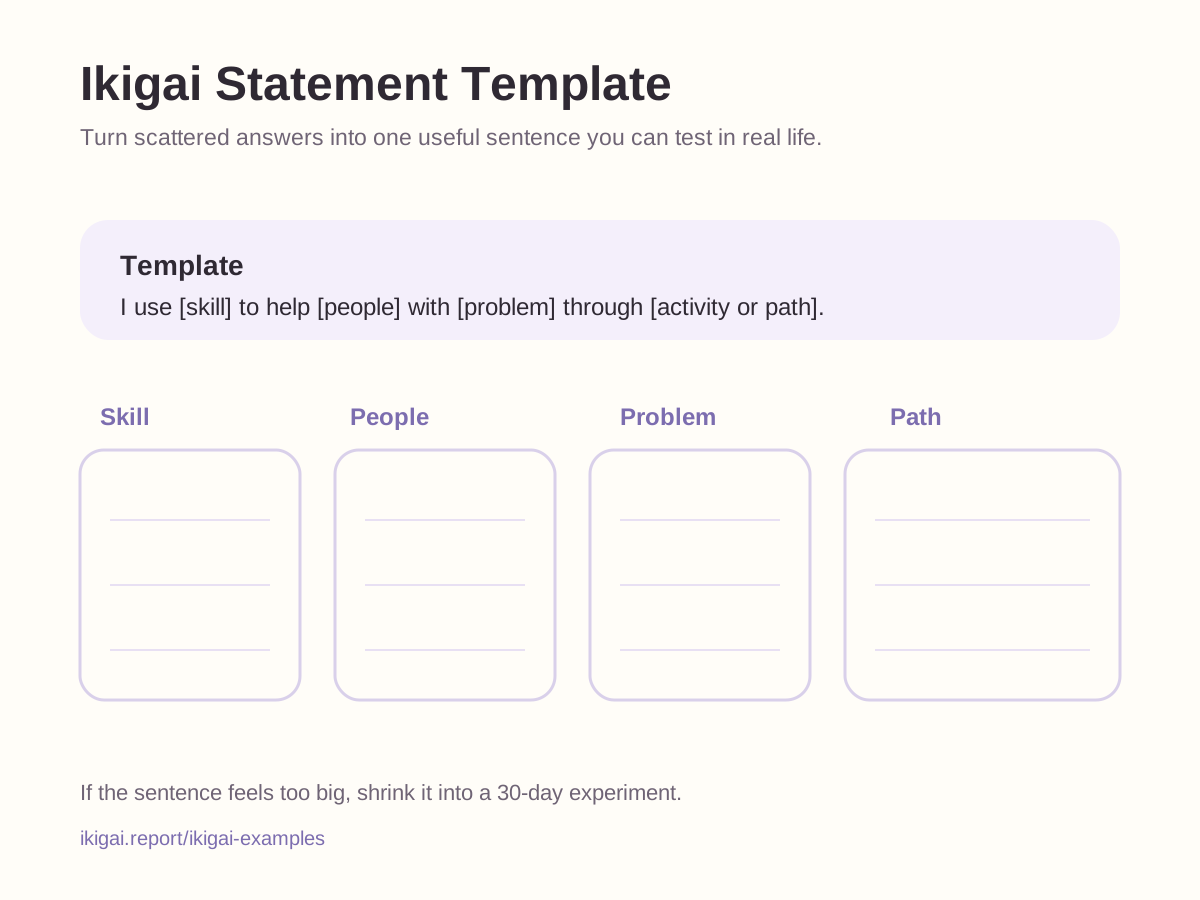
Ikigai Statement Template
A practical template for turning scattered answers into a usable sentence.
People Also Ask About Ikigai Examples
What are some examples of ikigai?
Examples include teaching, healing, building, creating art, protecting nature, connecting communities, solving problems, and fighting for justice. Ikigai is deeply personal - it can be as grand as changing the world or as simple as tending a garden.
Can ikigai be a hobby?
Yes! In Japanese culture, ikigai often IS a hobby. Gardening, pottery, fishing, calligraphy - any activity that brings deep satisfaction and a reason to get up each morning can be your ikigai. It does not need to be your career.
How do famous people describe their ikigai?
Marie Kondo describes her ikigai as helping people find joy through tidying. Hayao Miyazaki finds it in creating animated films that touch the soul. Most famous people with a clear ikigai describe it as an intersection of what they love and what serves others.
What's Your Ikigai?
Discover your unique ikigai archetype with our free 3-minute personalised test.
Take the Free Test →