Ikigai: The Japanese Secret to a Long and Happy Life
By Héctor García and Francesc Miralles
ISBN: 178633089X • 5 million copies sold worldwide
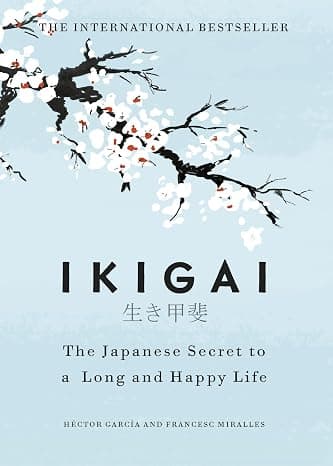
What the Book Is About
Published in 2016, Ikigai draws on interviews with the residents of Ogimi, a village in Okinawa, Japan - home to one of the world's highest concentrations of centenarians. The authors, Héctor García (who lives in Tokyo) and Francesc Miralles, explore what gives these people their remarkable longevity and zest for life.
The book weaves together Japanese philosophy, practical lifestyle advice, and stories from people who have found their reason for being. It covers topics like flow states, resilience, community, diet, gentle exercise (like tai chi and walking), and the art of not retiring.
Key Takeaways
- Everyone has an ikigai. The residents of Okinawa believe that everyone has a reason for being - you just need to find it.
- Stay active, do not retire. The concept of retirement barely exists in Okinawa. People continue doing meaningful work well into their 90s and beyond.
- Community matters. The moai system - small social groups that support each other for life - is a key factor in Okinawan longevity.
- Live in flow. The book draws on Mihaly Csikszentmihalyi's research on flow - the state of total immersion in a task - as a key ingredient of ikigai.
- Eat until 80% full. The Okinawan practice of "hara hachi bu" - eating until you are 80% full - contributes to health and longevity.
Our Review
This is a short, beautiful book - you can read it in an afternoon. It does not provide a step-by-step framework for finding your ikigai (that is what our free test is for). Instead, it paints a picture of what life looks like when ikigai is at its centre.
The strength of the book is its simplicity and warmth. The stories from Okinawa are genuinely inspiring. The weakness is that it sometimes feels surface-level - if you are looking for deep philosophical analysis, you may want to pair it with Mieko Kamiya's original research on ikigai.
Verdict: A perfect introduction to ikigai. Read it, then take our test to go deeper into your own personal ikigai.
Who Should Read It?
- Anyone feeling lost or searching for purpose
- People in career transitions
- Anyone interested in Japanese culture and philosophy
- People who want to live longer, healthier, more meaningful lives