The Ikigai Diagram Explained
The ikigai diagram is one of the most shared self-reflection tools in the world. Here is how to read it, use it, and understand its limitations.
Short answer
The ikigai diagram is a reflection tool, not a traditional Japanese formula.
Use the four circles to compare what you love, what you are good at, what the world needs, and what can be sustained in real life. If you want a faster starting point, take the free test first, then use the diagram to refine your answers.
Interactive Ikigai Diagram
Hover or tap each circle to explore what it represents.
Tap any area to explore the map
The Four Circles
❤️ What You Love (Passion)
Activities that make you lose track of time. Things you would do even if nobody was watching and nobody was paying. Your natural interests and the moments when you feel most alive.
⭐ What You're Good At (Talent)
Skills that come naturally to you - things others praise you for. These might be skills you have developed through practice, or talents you were born with. Often, your greatest strengths are invisible to you because they feel effortless.
🌍 What the World Needs (Mission)
Problems that frustrate you. Suffering you want to alleviate. Gaps in the world that you feel compelled to fill. This circle connects your personal gifts to something larger than yourself.
💰 What You Can Be Paid For (Vocation)
Value you can offer that others are willing to compensate. This does not necessarily mean a traditional salary - it could be freelancing, creating products, consulting, or building a business around your gifts.
The Overlaps
Passion
Love + Good At - You enjoy it and you excel, but it may not pay or serve others.
Mission
Love + World Needs - Meaningful but potentially unpaid and leveraging untrained skills.
Profession
Good At + Paid For - Stable and skilled, but potentially soulless without love or purpose.
Vocation
World Needs + Paid For - Useful and compensated, but may drain you without passion.
How to Use the Ikigai Diagram Without Getting Stuck
Treat the diagram as a conversation starter, not a perfect formula. Most people do not find a neat centre point on the first try. Start by writing honest answers in each circle, then look for small experiments that combine two or three circles at a time.
If one circle feels blank, that is the useful signal. A blank Love circle means you may need more curiosity and play. A blank Paid For circle means you may need market research. A blank World Needs circle means your next step may be service, volunteering, or talking to people outside your usual bubble.
The personalised test can help when you have raw thoughts but no pattern yet. The printable worksheet is better when you want a slower, pen-and-paper reflection session.
Our recommended path
Use the diagram, then take the Ikigai Report test.
The diagram is excellent for reflection, but it can leave you with too many loose notes. Ikigai Report turns those themes into a clearer result: one of 12 archetypes, a personalised four-circle reading, and a next step you can try.
If one circle feels blank, do not force an answer. Use that blank as the signal, then let the free test give you a starting pattern.
Downloadable tools
Download the diagram and worksheet
These original tools are designed to make the concept useful, not just interesting. Use them after reading the guide, or take the free test first and bring your result back to the worksheet.
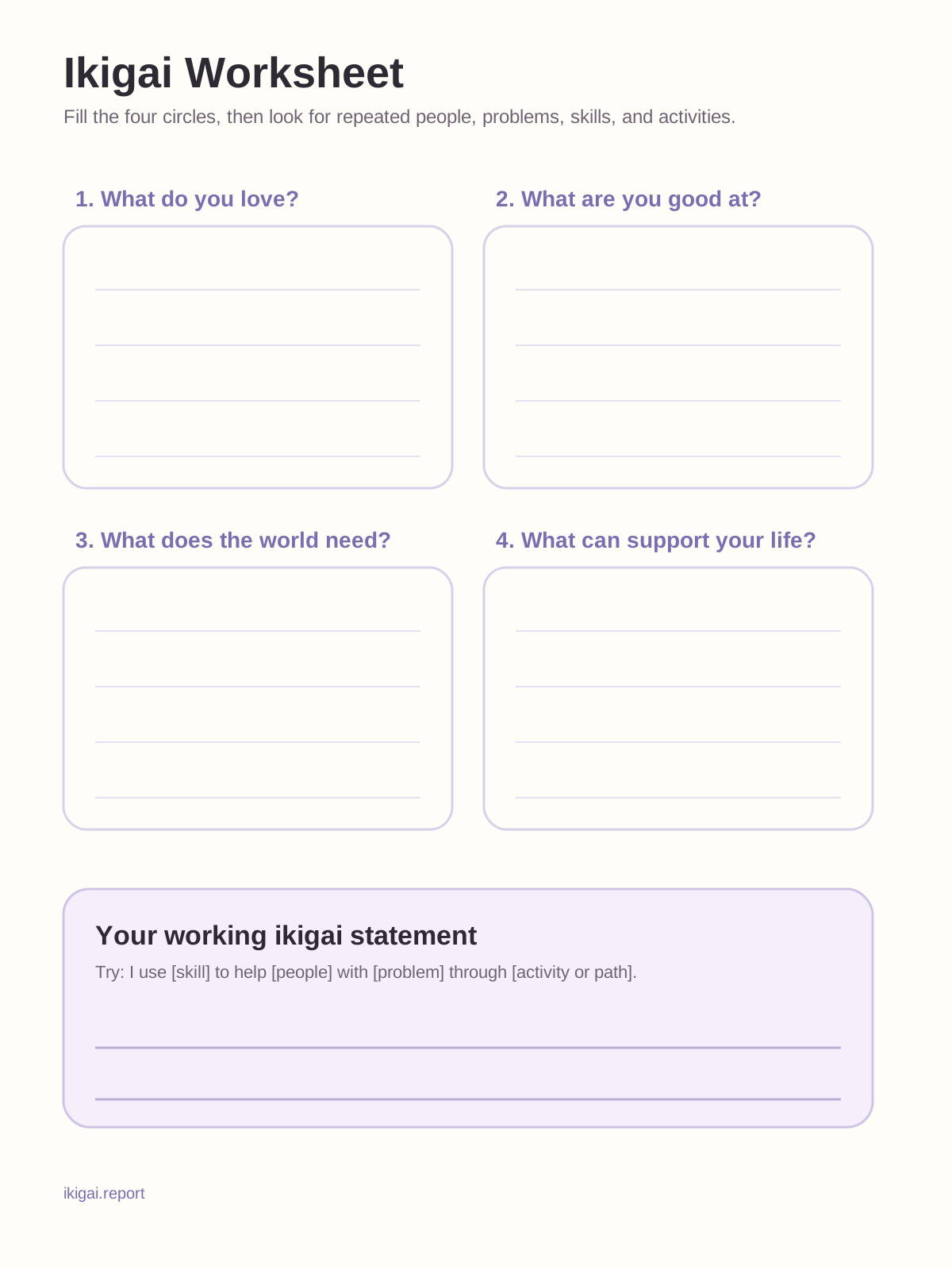
Printable Ikigai Worksheet
A one-page worksheet for mapping the four circles and writing a clear ikigai statement.
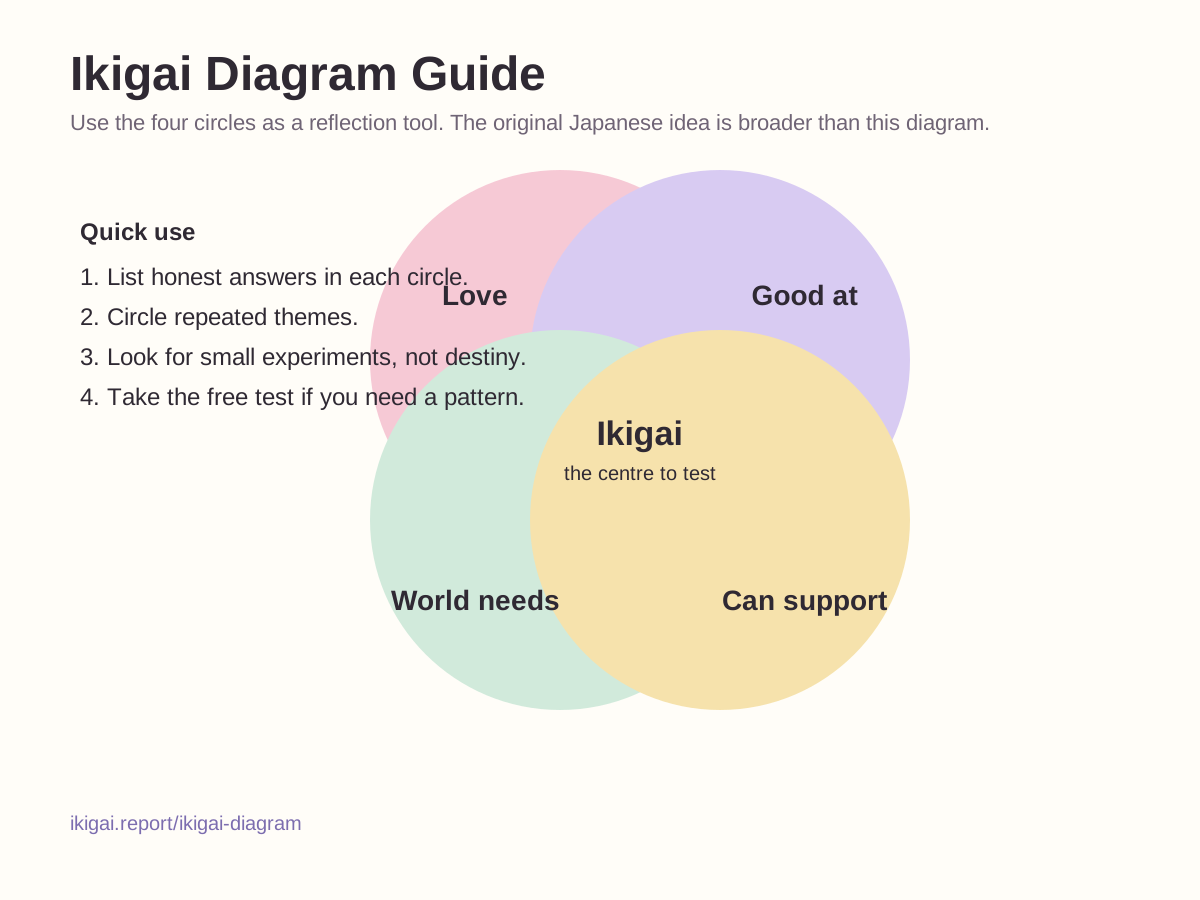
Ikigai Diagram Guide
A clean visual guide to the four circles, classic overlaps, and centre point.
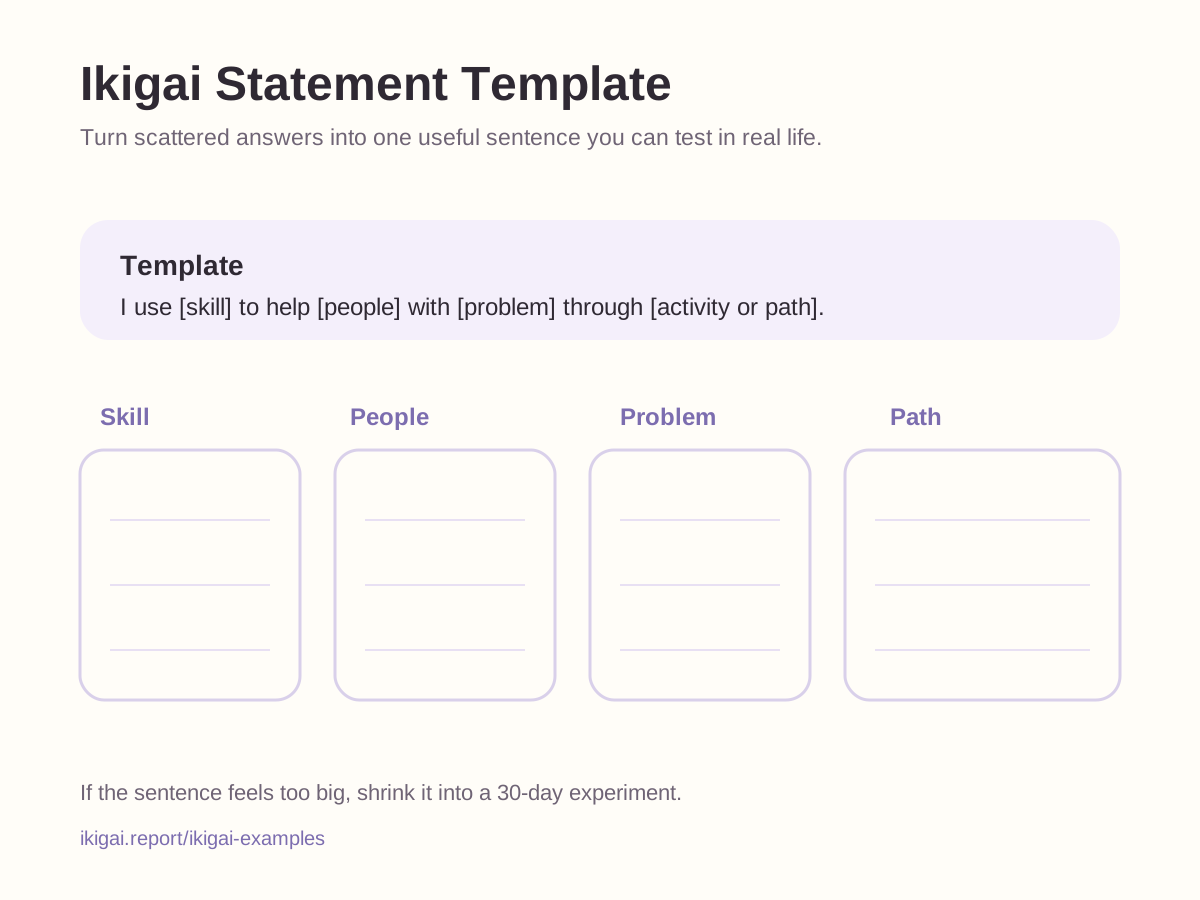
Ikigai Statement Template
A practical template for turning scattered answers into a usable sentence.
Related ikigai tools and guides
These core guides work together: start with the concept, use the diagram or worksheet, then take the personalised test when you want a clear result.
People Also Ask About the Ikigai Diagram
Is the ikigai Venn diagram real?
The diagram is a real framework - but it is not Japanese. It was created by British blogger Marc Winn in 2014 by combining the Japanese concept of ikigai with a separate purpose diagram by Andrés Zuzunaga.
Who created the ikigai diagram?
Marc Winn, a British blogger living on the island of Jersey, created it in 2014. He combined the Japanese idea of ikigai with a "purpose Venn diagram" originally created by Spanish astrologer Andrés Zuzunaga.
What are the 4 parts of ikigai?
The four parts are: What You Love, What You Are Good At, What the World Needs, and What You Can Be Paid For. The overlaps create Passion, Mission, Profession, and Vocation.
Find Your Place in the Diagram
Our personalised test maps your answers to the four circles and reveals your unique ikigai archetype.
Take the Free Test →